TAITMAIL Unseating the chair?
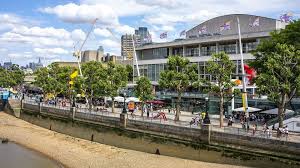
The dogs are out for Misan Harriman, the Southbank Centre’s chair, demanding his resignation.
There were mildly raised eyebrows when Harriman was appointed chairman of the Southbank Centre succeeding Susan Gilchrist, a PR high priestess, but it’s not any gaps in his CV that make him unsuitable, or anything he has done or not done in his tenure that the likes of Andrew Roberts, the historian, and the ex-head of BBC1 Danny Cohen, want him to resign over. And the shadow culture secretary has demanded an investigation into Harriman’s conduct, even to the point of ordering the Arts Council to stop its funding of the Southbank.
It’s for remarks he has made, or passed on, on Instagram and X showing solidarity with the victims of the recent Golders Screen stabbings, deploring the deaths of children in Gaza and for comparing Reform UK’s local elections results with events preceding the Holocaust: anti-semitism.
In response, a petition supporting Harriman has more than 100,000 signatures.
What is even odder about the timing of this onslaught is that, his detractors pointing to his lack of relevant experience for the job, they have waited until a few weeks before his term of office ends, in July. After five years.
He was appointed in 2021 at a time when governance in the arts was under scrutiny after a number of odd appointments which smacked of political favouritism– chairs of central government funded arts organisations are appointed by the culture secretary and there had been a number of apparent “placemen” placed. It was a time when inclusion and diversification were, as now, key considerations in arts administration.
Misan Harriman is the well-connected son of an African billionaire who was educated in Britain – Bradfield, a co-ed public school with its own open air Greek theatre where it puts on classical Greek oplays -- and after school became a City headhunter. Always fascinated by photography, he didn’t take it up seriously until he was 39 when his Swedish-born marketing executive wife bought him a camera as a birthday present. He is self-taught (from videos) and quickly amassed a portfolio of celebrity portraits – Rhianna, Stormzy, the Duchess of Sussex, the duchess’s child Lilibet, Tom Cruise. He is an ambassador for Save the Children.
In 2020 he ventured into reportage documenting Extinction Rebellion and his Black Lives Matter pictures were seen around the world. He photographed last year’s London protests calling for ceasefire in Gaza.
He was the first Black photographer to provide the cover for British Vogue, commissioned by the editor Edward Enninful who described him as “the voice that was missing”. In his 2023 directorial debut his film The After won an Oscar nomination. He sold his picture of the hockey player Darcy Bourne carrying a banner declaring “Why is ending racism a debate?” at auction for £10,000 in aid of the Anthony Nolan blood cancer charity. He has half a million Instagram followers.
His appointment came as a recommendation from the board endorsed by ACE chairman Nicholas Serota. “His proven commitment to innovation and to the diverse voices of the UK will be especially valuable to an iconic institution which was conceived as a beacon for culture of all kinds as the nation emerged from the trauma of world war” Serota said at the time.
It was a time when the government had decided to take more of a direct interest in appointments of the trustees of nationally funded cultural institutions. Its response started with the Black Lives Matter demonstration in Bristol when protestors tore up the statue of a slaver and tossed it into the harbour. Dowden railed against “historical interference” and threatened to stop the funding of any museum supporting decolonialisation. Then Dowden cancelled the automatic reappointment of a National Museums Greenwich trustee because he was a researcher whose work included decolonising education - abandoning the assumption in teaching that the colonialised were somehow inferior to the colonialists - which led to the resignation of the board’s chairman. He tried, unsuccessfully, to block the appointment of Mary Beard to the board of the British Museum – of which he had just appointed George Osborne chair.
John Tusa, ex-MD of both the BBC World Service and the Barbican Centre, wrote then: “In practice, sitting on a board, let alone chairing one, is one of the most demanding, complex and taxing activities in the world of public life”.
So actually it’s a matter of governance, of trustees like Beard making decisions based on personal knowledge, proper research, consultation and consideration, and personal favouritism of politicians should not be a factor despite the ministerial imprimatur being on key national institutions’ appointments. As Tusa said, sitting on the board of a cultural organisation - invariably voluntary - is hard work, not just a reward for political service or because of the promise of a donation.
The Cultural Governance Alliance was founded in 2018 by Hilary Carty of the Clore Leadership Programme as a partnership of organisations whose mission was “to champion, share and promote best practice in the governance of culture”. It started with ten founding members and now has over 90. It took some time to get going, but since that horrific year of 2021 there have been few howlers in the appointment of chairs. There are still some curious anomalies, though.
John Booth became chair of the National Gallery when Tony Hall, a few weeks after being appointed, had to stand down again because, as DG of the BBC, he had been in charge at the time Martin Bashir got the interview with Princess Diana under false pretences. Hall is now chairman of the Natural History Museum. Next door, the chairman of the Science Museum is the King’s brother-in-law.
The V&A’s chair is Minouche Shafik, economist, academic and Lords cross-bencher, born into a Muslim family. She has many claims to fame, one of which is that as president of Columbia University in 2024 she called in the NYPD to deal with Palestine protestors more than 100 of whom were arrested –and left soon afterwards, taking up a role as Keir Starmer’s economic adviser. Presumably, she doesn’t subscribe to Instagram.
Harriman is committed, opinionated, gifted, creative and said to be a popular companion. He is coming to the end of a tour of duty that by all accounts has been a success, during which he should have learned a simple lesson: when in office, stay off the social media.
Photo copyright Misan Harriman