TAITMAIL Hope in the hotel tax
That it was Lisa Nandy who, on or around the 25th anniversary of free admission to national museums, announced this week that the government was doing a reverse ferret by declaring charges would not be reimposed for anyone, including foreigners, is, well, interesting.
Keir Starmer’s government, with the same culture secretary, had followed Margaret Hodge’s advice and announced a policy of foreign tourists paying for entry, though not how that would be done. The 15 English national museums and galleries were told by DCMS to go away and come up with a plan, by the end of the year.
But Nandy chose to announce a reversal (not a u-turn, note) at a museum whose creation was at the forefront of the rebirth of Liverpool Docks as a cultural cynosure, Tate Liverpool. She did it the day before the Labour Conference opened in Liverpool, Andy Burnham’s home town, and two days before Burnham’s ground-breaking (we can only hope again) speech in which he didn’t mention culture or the arts once.
But Burnham, a former culture secretary himself, was at the cutting of the ribbon that opened up museums and galleries to all when he was a 31-year-old political advisor to the then culture secretary Chris Smith.
It was, effectively, an above-board tax fiddle involving a manoeuvring of VAT devised in collaboration with what was still called the National Art-Collections Fund and its executive director Alison Cole. Now it’s Art Fund and she’s director of the Cultural Policy Unit, the think tank whose research has guided this policy reverse. Small world.
Just before free admission became fact in 2001 Burnham stood for Parliament and was elected, going on to other things, but his boss, now Lord Smith of Finsbury, will for ever be associated with free admission for national museums and galleries.
Because it set the norm. Local and regional authorities followed the national lead and blithely launched into it to welcome foreign tourists they hadn’t seen before (overseas tourists spend £31bn a year here now), and providing education and entertainment for their communities.
“The national museums’ collections belong to everyone” said Art Fund’s director Jenny Waldman. “Keeping free entry for all will ensure nobody is put off at the door. Twenty-five years of free entry has seen huge benefits in increased visitors, tourism and economic impact - we congratulate the government for committing to maintaining it.”
Cole added, perhaps a little over-largely: “This is one of the landmark cultural policies of our times - one that has established itself as a universal public good. It is wonderful that the government has recognised not only its economic merits, but also its power to express our values and shape how we engage with the world.”
The benefits that have accrued since 2001 are in the statistics Art Fund and the CPU were able to point towards: visits to England’s national museums and galleries have gone up by 96%, to be worth an annual £45m to the economy by this year; that six of the ten most visited Association of Leading Visitor Attraction places are museums; 11.82m trips include museums visits, a third; last year’s 19.4m overseas visits generated income through exhibitions, retail, donations and corporate giving worth £563m, according to the National Audit Office.
But the decision is a reply to a mounting campaign for admission charges to be reinstated, led by the ex-V&A director Mark Jones, in the face of a growing financial crisis for our museums and galleries – OK for the 15 nationals, but there are 2,000-plus others that don’t come under the DCMS protective wing, vulnerable to local council whim (local authority support for the arts and heritage is not compulsory). “It would make sense for us to charge overseas visitors for admission to museums as they charge us when we visit their museums” Jones told The Times.
There might be a multiplier effect from the nationals cascading down on the minnows, but that takes time. The after effects of Covid shutdown, rising costs of power, uplift in minimum wages, National Insurance and business rate increases, mean those minnows are having to take action now. Coventry’s Herbert Art Gallery and Museum introduced charges last year; Worcester City Art Gallery and Museum is considering charging non-residents; the award-winning River and Rowing Museum at Henley closed earlier this year because of financial failure; Bristol and Peterborough councils are looking at cuts to their museums’ operations which could include opening on fewer days; in Scotland, the new £27.2m Perth Museum a couple of years ago but has had to have a cash injection from the council to deal with unexpectedly high overheads; and the venerable Royal Academy, which famously receives no subsidy, has cut 18% of its staff to deal with financial losses.
And those same financial headaches are besetting the nationals too, so that free admission by itself is not going to make any difference to income. “The biggest visitor attractions in Britain are our great museums and galleries, yet that does not translate into the resources needed to maintain them” Jones added. Foreigners should be charged.
Turned out that all 15 concluded that they were against, preferring a tourist tax, and that has now been made policy with responsibility being devolved to regional mayors and strategic authorities.
But this Overnight Stay Levy Bill ,just introduced by the housing secretary, Angela Rayner, is intentionally vague because Burnham wants the mayors to have as much spending licence as possible, but it recommends a 5% levy which could generate £1bn a year, maybe much more. “This measure will give mayors the choice to raise and reinvest funding where it’s needed most” Rayner said. They may think it’s needed most by museums or by keeping the streets clean, paying the bus fares for under-18s or even augmenting other areas of budget needs. Care homes, maybe. Decisions will be “taken by people who know their area best”.
Too vague, says the former Bank of England wonk and now CEO of the Royal Society of Arts Andy Haldane. “The UK has systematically under-invested in its rich cultural assets and has stymied its local leaders’ capacity to raise taxes to invest in them. Legislating for a city tourism tax would solve these problems at a stroke.”
Can we rely on the new mayors to value their culture as much as Nandy and Haldane? “Our museums are the places that light up the world” she said on Sunday. “They remind of us of our shared history, and enable us to step outside the confines of our lives. There is something incredibly special about that. That’s why they must be free, for ever, for everyone to access.”
But for the rest - can we afford to keep them open, free or otherwise, without Haldane’s prescriptive use of the hotel tax in action?
We can but hope. Again.
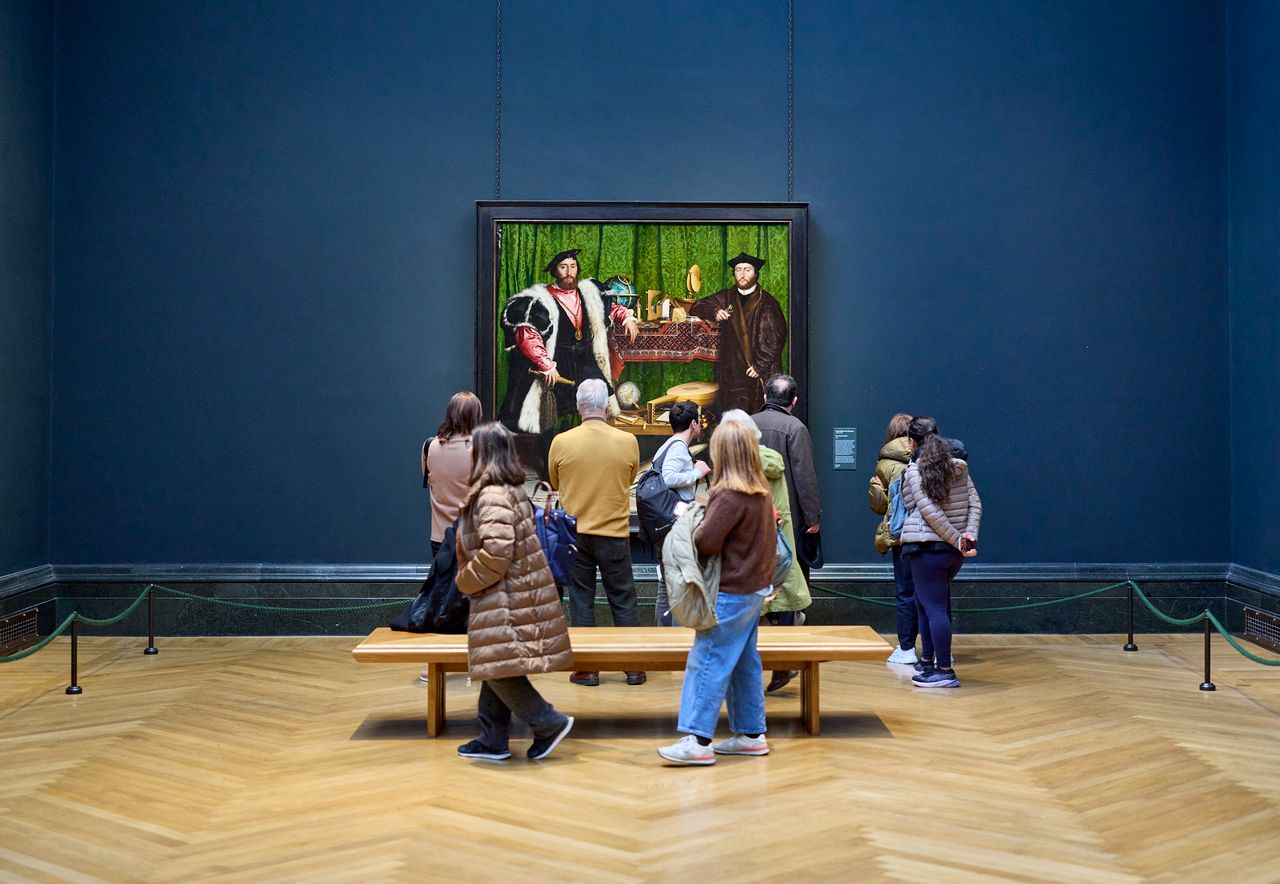
Image, courtesy National Gallery